This the script co-written by Srijan and Neha for Episode 35 of Never on the Backfoot Podcast. Enjoy:’)
Welcome to the review and analysis episode of the India vs England ODI series. It was a very exciting series considering we had the top two sides contesting and man, were all the matches high scoring. We witnessed some good quality batting and bowling coupled with Virat Kohli, unfortunately, losing the toss on all three occasions definitely helped as India batted first and in crunch situations, we really got to see some good performers and someone taking responsibility.
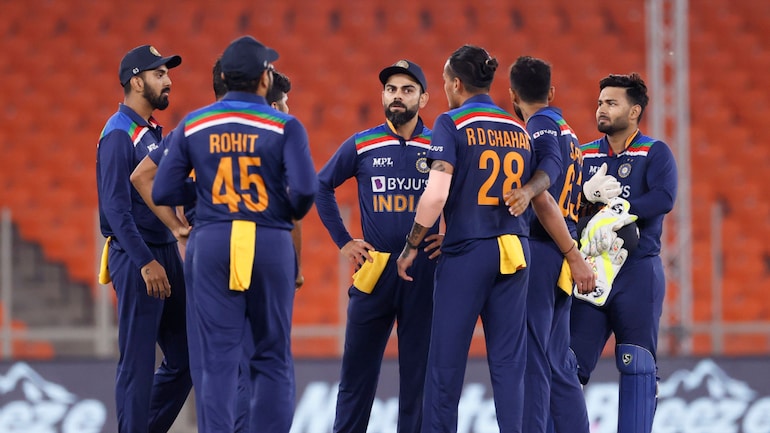
Image Courtesy: India Today
On the podcast today joining me for the comprehensive analysis of the ODI series, we have Srijan. To talk about our guest today, Srijan is an ardent cricket fan and enthusiast. Currently doing his Bachelors in Economics, Political Science and Sociology at Christ University, Bangalore. He really enjoys the game and his love for the game is not defined by who is playing, how, when and where. Srijan is of the opinion that one’s love for the game shouldn’t be defined by who is playing the sport. It should rather be on how it is played and on the game itself. Ultimately no one is greater than the sport. Though he never really played the game on a professional level, he really enjoys watching and talking about the game to anyone and everyone.
Before we get started with the topic, just a couple of questions to acquaint our listeners about you and your love for the game.
- So, what got you first interested in the game? Tell us a bit about yourself as a cricket fan and your early memories of this sport.
So to speak about myself, I am probably someone who rarely played cricket. I first got interested in the game thanks to a Samsung mobile phone! Back when smartphones were a thing, I would be playing this cricket game on that phone for hours together. As weird as it may sound, this game was the reason I gained interest in the sport and got to know all the basics of the game. My earliest memory of watching the game live on the TV after this was probably in the summer of 2010. Chris Gayle was the latest recruit for RCB and was smashing sixes in the Chinnaswamy at will. The time I started watching the game properly was the 2011 World Cup final and the subsequent IPL. After that, I would go on to play cricket games on the computer and browse on for more information on players on Cricinfo and Wikipedia.
- How was it like playing cricket in school or in your childhood and your fondest memories?
As I said earlier, I am probably one person who rarely played the game and yet I am so deeply fascinated by anyone and everyone who played the game. Even while at school, I used to get fascinated by watching my friends and juniors play the game from a distance. Having said that, it is not like I never played the game or held the bat in hand. Whenever I could find some time, I made sure to play with my friends on the street and at the local playground. I always made sure to do anything that kept me occupied on the ground. Batting, bowling, wicketkeeping, I was always ready to do anything. Those days, which were my initial days familiarizing myself with the sport remain my fondest memories growing up with the sport
- Who was your favourite cricketer growing up and who is it currently?
Actually, this one is a very interesting question. Whenever I get asked this question by someone, I always say that I love the sport overall and I don’t have anyone particular favourite since I firmly believe that no one is above the sport itself. But if I had to pick just a few, one of them surely has to be Ravichandran Ashwin. My love for Ashwin is also fuelled by the fact that his residence is just a couple of streets down from where I live in Chennai and also that Ashwin studied in the same school that I studied in. Also, my start to watching cricket coincided with Ashwin’s rise as a bowler after having a phenomenal IPL in 2010 and his breakthrough to the Indian team.
Over the years, his mastery with the ball has made me admire his skill and work ethic as well. I don’t think we have too many bowlers who put in so much thought behind their bowling and make elaborate plans for each and every player in the opposition. I still vividly remember his ball to Hashim Amla in the World T20 in 2014. Ah! Talking about it makes me want to go watch it again!
- Your favourite match of all time.
My favourite match of all time definitely has to be the 2011 World Cup final. Purely because it was my first proper memory of watching the game live on TV. I had made sure I had everything ready by the time the match began at 1:30 in the afternoon. I remember making notes on paper of each batsman’s score and each bowler’s match figures. That was probably the best match I have ever watched because I had literally zero expectations and was entering into a new world with a fresh mind. And the way Dhoni finished it off was just icing on the cake. That for me served as a motivating factor to try and know more about the sport. Ravi Shastri’s concluding words in the comm box still ring in my ears to this day. Ravi Shastri was another person who had a telling influence on my liking of the sport. Whenever I play a game on my phone or on the ground, I try to add my own commentary to it. It does seem odd for someone who is watching me from a distance but I thoroughly enjoy the process.
- Your fondest memory of having gone to a stadium to watch the match and your experience
Actually, to be very frank, to this day, I have gone to the stadium only once! It was the Champions League match in Chennai and the game was CSK v TT. This was in the year 2011, again my formative years of watching cricket. TT was restricted to an under-par total thanks to some good bowling by all the bowlers and Ashwin had a good night too, returning with figures of 1/25 of 4 overs. And then came the Chennai Super Kings batting innings and that never got going thanks to some superb bowling by Sunil Narine who had match figures of 3/8 of 4 overs. MS Dhoni scored 7 of 22 balls. CSK narrowly missed the target by 7 runs. After that I tried getting tickets for matches at Chennai but was unlucky on most occasions. I almost got tickets for the recent Test at Chennai but I backed out at the last minute because of Covid fears.
- What is the positive impact of this sport on your life?
I tell everyone about this! I feel that metaphorically, Test Cricket is not a game but a way of life. Teaches us to keep fighting with all the odds until we reach our target. Teams might be down in the dumps at the end of one session but may be right back on top by the end of the next session through pure grit, determination and courage. When things have not gone my way, I have found solace in cricket and also at my best, I have celebrated by watching cricket.
- Which is your favourite cricket book of all time?
I actually enjoy reading autobiographies of cricket. When in school, I had read Sachin Tendulkar’s autobiography about 5-6 times from the school library without getting bored. The librarian even offered me that book to take it home and keep it as a memorabilia when I left 12th but I declined! I recently read a book that Bharat Sundaresan has authored called The Dhoni Touch: Unravelling the Enigma That Is Mahendra Singh Dhoni. I also plan to read a book called Cricket Drona: For the Love of Vasoo Paranjape authored by his son Jatin Pranjape who served as one of the selectors for the Indian men’s team from 2016 to 2017. Vasoo Paranjpe was a cricket coach based in Mumbai and he has had a hand in the formative years of many of Indian cricketers from Mumbai
- Do you feel IPL is still a threat to the longest format of the game?
The answer to this question is both yes and no. Yes because the advent of T20 cricket has almost made qualities such as building an innings and batting time with patience, qualities that are essential for any Test batsman. The game became too commercialised with the fast paced nature of the game attracting viewers and revenue. In the past players have chosen to play various T20 leagues around the world over Test cricket but that is changing now. With top flight cricketers such as Virat Kohli highlighting the importance of the format. The ICC is also proactive in scheduling and actively promoting the game.
No because with the advent of T20 cricket, batsmen have started playing fearless cricket. To chase 320+ runs on a day 5 pitch at the Gabba would have been unthinkable 10 years back. Rishabh Pant literally played Nathan Lyon out of the game in Sydney, all this is thanks to T20 cricket. It has changed the approach of the batsmen. They now think that any target is chasable.
- Do you have an all-time XI?
Yes! My all time XI would be Hyden and Langer,Sachin, Ponting, Lara, Kallis, Gilchrist, Warne, Wasim, Waquar and Steyn.
Neha: Would’ve loved to ask you more questions and listen and live your experiences but let’s now jump straight into our topic.
We will start off by focussing on the summary of the matches, a special shoutout to Nitin Menon, Shikhar Dhawan’s form, Jonny Bairstow’s imperious form, Jason Roy and Jonny Bairstow at the top of the order and their partnerships in comparison to the resurrection act that Pandya and Pant, Sam Curran’s whirlwind knock in the final ODI, Prasidh Krishna and Krunal Pandya’s debut, Hardik bowling and what an advantage it is for India, Morgan’s injury and take on Buttler’s captaincy, Bhuvi’s rich vein of form from the T20I series, India’s concern for the poor form of spinners in the limited-overs set up and the inability of India to get wickets first up in the powerplay and how that adds on to pressure are some of the pointers covered in this first part.
Let’s get started on our analysis and review episode of the ODI series.
Neha: Summary of the matches:
In the 1st ODI, India put up a formidable 317 on the board and Dhawan top-scored with 98 with KL Rahul and Krunal Pandya (mind you on his debut) chipping in with handy knocks of 62 and 58* respectively ensuring we had the decent total on the board. England in reply could only manage 251 and although Bairstow scored a scintillating 94, a brilliant spell by Prasidh Krishna with 4 wickets and Shardul Thakur with 3 turned things around for India in restricting and dismissing England.
In the 2nd ODI, India was bolstered by a brilliant 108 by Rahul, 77 of Pant and 66 of Kohli that propelled them to a very competitive and defendable 336. England was off to a flyer and Bairstow top-scored with a brilliant 124 and with Stokes contributing with that 99 and Roy with a 55 wrapped things easily and England won the match and levelled the series 1-1.
In the 3rd ODI, India lost the toss yet again and put to bat first put up 329 on the board. There were some phases where the sporadic loss of wickets meant India couldn’t capitalise on the partnerships and England was good in restricting India but a solid knock from Pant, Dhawan and Pandya ensured we had a good-ish total. But England definitely did not give anything away whilst chasing staying in the hunt with some handy knocks of Livingstone and Malan actually working for them. The beautiful effort from Curran, a magnificent 95 and India’s poor fielding ensured this was going to be a nail biter but India pulled things back in style and finally won the match thanks to a very good death over by Nattu and we won the series 2-1.
Srijan: Shoutout to Nitin Menon
Yes! He has surely been the find of this series. In the Covid-era where teams had to make do with local umpires, Nithin Menon really carved a niche for himself. To give our listeners some stats, 40 referrals: Five upheld, 12 Umpire’s Call, 23 Struck Down
Of the 35 LBW referrals, only two were overturned. (Stat credit @deeputalks on Twitter). That is mind-boggling stuff. We sadly don’t talk about Indian umpires often but with Nitin Menon, we surely should start highlighting our Indian umpires more on the global stage.
Neha: Shikhar Dhawan’s form:
The series was particularly important for the 35-year-old Shikhar Dhawan, who returned to the bench after one T20I and is facing stiff competition in this format from rising youngsters. With the management having plenty of options inside the squad (Shubman Gill) and waiting on the outside (Prithvi Shaw and Devdutt Padikkal) for the opening slot, it was a litmus test for Dhawan to prove himself in the opener and he was in good touch proving himself still relevant in this format.
Srijan: Jonny Bairstow’s imperious form:
Jonny Bairstow has been the lynchpin of England’s batting at the top of the order ever since England started their transition in trying to be a more potent force with the bat in the limited-overs format and he is a quality player. Unfortunately, due to England’s rotation policy, he couldn’t contribute much in the Tests or the T20Is, but come the ODI series, Jonny Bairstow really showed his class. With Root missing the ODI leg of the series and Morgan unavailable due to injury, Bairstow’s contributions at the top of the order were of even more significance and true to his nature, Bairstow really played well and deservedly got the MoS award.
Neha: Jason Roy and Jonny Bairstow at the top of the order and their partnerships in comparison to the resurrection act that Pandya and Pant have to do at the fall of wickets
The pair average 61.60 as an opening partnership – among opening pairs to have batted together in at least 20 innings, they stand at the top of the pile. Only four other ODI opening pairs have more century stands than them. They’ve been prolific throughout and they also have the highest run-rate, operating at 7.02 runs an over. The pair seem to bring the best out of one another. Since Bairstow’s promotion to the top of the order in 2017, Roy has averaged 45.55 when he’s played in the same side as the Yorkshireman, five runs more than his career average. Bairstow himself has looked the part from day one as an ODI opener, with his record up there with the best in the world. We saw how well they performed in the ODIs and it is a testament to the brilliance and quality of their batting.
In comparison, when we see India we have Rohit and Dhawan opening. While England go hard at the bowlers right from the word go, Rohit Sharma and Shikhar Dhawan are generally content being there out in the middle by the end of the 10th over and then picking pace. The signs of a change in their approach were finally visible in the series decider when Dhawan started to go hard up top. But India’s plans appeared to go for a toss when they lost their top three in three overs. Dhawan, Rohit and Virat Kohli have done the bulk of the scoring for the national side in this format over the last few years and losing all three before the 18th over already posed a challenge on a wicket where a huge total was needed.
Instead of following the old template of trying to resurrect an innings by being watchful and then going hard at the end, the finishers paved the way for India going forward by continuing to go for the kill despite being on the backfoot. Hardik Pandya and Rishabh Pant stuck to the plans of going hard against the spinners and it was controlled aggression at its best where a team managed to turn the tables in a matter of a few overs despite appearing to be in trouble. Their enterprising partnership also reinforced the belief that India doesn’t always need one of their top order players to bat deep into an ODI innings.
Srijan: Sam Curran’s whirlwind knock in the final ODI
Sam Curran was absolutely brilliant in the 3rd ODI. I really liked the way he played the situation when the chips were down. Unfortunately, England couldn’t cross the line but he made a really good case for himself to bat higher up the order. Netizens noticed shades of MS Dhoni in the way he was denying strike to Mark Wood and put the onus on himself to try and make England win the match and called it the CSK effect which is true to some extent. With this performance, Sam Curran has showcased his ability to bat long and play according to the situation. Overall these are good signs for England.
Neha: Prasidh Krishna and Krunal Pandya’s debut
These were some very interesting faces that we got to see featuring for India in the playing 11. Debutants Krunal Pandya and Prasidh Krishna made the big stage their own as Krunal scored a magnificent 58 off 31 and smashed the fastest fifty by a debutant to fire India to 317. It was an emotional moment for the man and it was seen how he was acknowledging at each stage his father’s untimely demise and it was great to see him effortlessly bat.
Prasidh Krishna on the other hand registered brilliant bowling figures by an Indian debutant as he scalped 4 wickets. Having leaked 37 runs in his first three overs, came back strongly and troubled the batsmen with his ability to generate extra bounce. Very impressive debuts I must say.
Srijan: Hardik bowling and what an advantage it is for India
Hardik’s bowling has been one of the key takeaways from this series. In the T20Is he consistently bowled 4 overs at a good pace and at times bowled with the new ball too. These are actually good signs for India to see Hardik be fully fit and bowling at full tilt. I, to be very honest, was quite surprised to see him not bowling in the first two ODIs, especially after having seen him bowl consistently in the T20Is. He came back with the ball in the 3rd ODI and that made quite the difference. To bowl 9 overs for 48 runs was a great achievement considering all the other bowlers from both sides were going for a handful. He might have not got any wickets to show for his efforts with the ball but the fact that he offered control from one end along with Bhuvneshwar Kumar ended up deciding the match in India’s favour in my opinion.
Hardik bowling at full tilt changes the dynamics of this Indian limited-overs side. This only augurs well for the team going into the future.
Neha: Morgan’s injury and take on Buttler’s captaincy
Eoin Morgan had been ruled out of the remainder of the ODI series against India with a hand injury. Jos Buttler captained in his absence and did a decent job. In the past, Jos Buttler has led England 11 times in limited-overs cricket, with his first captaincy stint coming in 2015.
Morgan sustained a split webbing between his thumb and index finger in the series opener that required four stitches. While he took part in the fielding drill on Thursday, he declared himself unfit soon after. Dawid Malan came in for him and impressed scoring a tricky 50 stalling what was going to be a sweet win for India.
Srijan: Bhuvi’s rich vein of form from the T20I series
Bhuvi’s return to the side in the T20I series and the subsequent ODIs has to be the biggest gain of this series for India. This is even more than the fact that Hardik’s back bowling at full tilt. And Bhuvi being Bhuvi literally picked up from where he left off. To give our listeners some stats, while bowlers from both sides went for a lot of runs, Bhuvi was heads and shoulders above all of them. While the average econ rate of the bowlers was about 6.60 in the ODIs and 8.49 in the T20Is Bhuvi was going at about an astonishing 4.65 in the ODIs and 6.38 in the T20Is. Let that sink in! Tells us how valuable a player Bhuvi is to this Indian side! I was actually surprised he didn’t get chosen for the Man of the Series award. He single handedly won the series with the ball for India
Neha: India’s concern for the poor form of spinners in the limited-overs set up
The Indian spinners have undoubtedly had a torrid time with the ball in the limited-overs set up. Washi, Chahal have been expensive ever since the T20I series and the story was no different with Kuldeep Yadav and Krunal Pandya who leaked runs in the first ODI. To put this in perspective, Kuldeep Yadav and Krunal Pandya – who combined went for 127/1 in 19 overs – were unimpressive.
Krunal, after conceding 36 in his first three overs, managed to pull things back but Yadav looked listless in his nine overs and in the many series he has featured. The Chinaman bowler, who has been regularly overlooked for a place in the XI in the last few months, couldn’t do any good to his future prospects. His numbers show a worrying trend. Yadav who had been picked as a mystery spinner after the 2017 Champions Trophy, took 93 wickets at an average of 23 and an economy rate of 4.95 till the 2019 World Cup. After that, he has averaged 51.41 for his 12 wickets, conceding 6.1 runs per over.
In Yuzvendra Chahal, India has an able replacement but bringing in the leg-spinner could be a risk against a batting line-up comprising attacking left-handers like Ben Stokes, Moeen Ali and Sam Curran. Besides, Krunal, whose place in the team looks assured thanks to his 31-ball 58* on debut in the first ODI, also brings the ball into the left-hander. Washington Sundar is the other spinner in the squad but India may not be confident of using him as a lead spinner in the ODIs.
Srijan: Inability of India to get wickets first up in the powerplay and how that adds on to pressure
Yes. If anything, that has been one area of concern for the Indian team since the conclusion of the 2019 World Cup. A large part of India’s success in ODIs had been that Bhuvi and Bumrah take wickets upfront leaving it for the spinners to do the damage in the middle overs. A stat that I recollect right is that India win 50% matches when they take 2 or more wickets in the first 10-15 overs. We had Bhuvi and Bumrah with Shami to do the damage in the first 10 overs with Chahal and Kuldeep doing the rest in the middle phase. With our mainstream attack missing out due to the fact that they were either rested or injured meant that taking wickets upfront was difficult.
Against a team such as England who go out with all guns blazing right from the start, it is very important to get wickets to restrict them to a good total. That is surely one thing that India missed having. Jonny Bairstow and Jason Roy got off to a flyer in the 2 ODIs and nearly won the game for England in one of them.
I am sure that with the return of Bumrah and Shami things will get better.
In early 2020, when India went to New Zealand, this is one area that they struggled in and also in Australia where India lost the series you see our inability to pick wickets upfront so this is one thing that the team management must have made note of and are definitely working on
With this, we draw the curtain on Part 1 of this series. Srijan will be joining us for the last part and we will be exploring other aspects of the ODI Series and would love to have you listen to us.
Part 2:
Neha: Welcome back to Part 2 of this series. We have Srijan with us on the Podcast and we continue our discussion on yet another set of very interesting takeaways and pointers from the ODI Series.
We’ve delved largely into, Ben Stokes, the handy all-rounder, India losing the toss continuously and the pressures of batting first, KL Rahul’s dominance, Nattu’s death bowling, Mark Wood’s pace, Rishabh Pant, the man we need in the limited-overs set-up, India’s shocking fielding in some parts of the series, players we sorely missed out on, A case for Shardul in the limited-overs set up (highest wicket-taker), Virat Kohli’s inability to convert them to those 100s, the ideal #4 for India, positives for England and India, India’s comprehensive win across all formats, Bio bubbles and players mental health, the possibility of a rotation policy like England among the plethora of topics discussed. Welcome back to Part 2.
Neha: Ben Stokes, the handy all-rounder
Ben Stokes definitely has to be a positive for England. Throughout the series, he has been instrumental and his consistent rise in international cricket has been laudable. Buttler said that Stokes’ batting has improved over the years and man, it has. Partnering Jonny Bairstow, Ben Stokes played a knock of 99 as they put up 175 on the board with that partnership and England defeated India with 39 balls to spare to level the three-match series 1-1. In the 99-run knock, Stokes hammered 10 sixes and he took a special liking to India’s spinners – Kuldeep Yadav and Krunal Pandya. He’s a good player at any place and has always raised the bar making him a valuable player for any team he plays.
Srijan: India losing the toss continuously and the pressures of batting first
On the lighter side, to start off I think as Eoin Morgan had mentioned, the coin that was used in this series was a double-headed coin! But seriously though I think that as Virat Kohli mentioned, this has been one thing that the team has been wanting to do for a long time. In the T20I series, despite losing the toss India successfully defended targets on dewy outfields in Ahmedabad. Here in Pune, once again India batted first on all three occasions. I am a firm believer that toss is not in control of any one individual and the team that plays good cricket in all three facets of the game batting bowling and fielding deserves to be winners of the game. India ended up defending targets for most part of the series. This was especially good because we were doing it with a relatively inexperienced attack
Neha: KL Rahul’s dominance
Rahul has managed scores of 62* and 108 in the 1st 2 ODIs and looked in good touch considering what a torrid T20 series he had. Batting in multiple positions has enabled Rahul to change his game as per the situations of the matches. In the T20Is, however, it was Rishabh Pant, who not only batted well but kept wickets neatly too and that led to calls for snubbing Rahul from the ODIs as well. Now, it was a complete case of mixing formats. Very conveniently, his exceptional ODI run in the middle-order was forgotten. In lead up to the ODIs against England, Rahul, from the point of time, started batting in the middle-order, averaging 56.57 with a strike-rate of 111.23, crossing the 50-run-mark four out of eight times. He was lacking game time, and the moment he got that, he shunned his critics in style scoring 62*, 108 and 7 in the England series. It’s high time that people stop mixing formats and branding players writing them off even before the actual game is played.
Srijan: Nattu’s death bowling
Nattu’s death bowling has certainly been a huge plus for this Indian side this season. When he came into the side in Australia, not many of them expected him to do wonders. Yes, over the years, Natarajan had built his reputation of being able to bowl pinpoint yorkers but he was largely untested at the international stage. The way he came to the side and delivered without being unfazed of the big stage is one of the biggest takeaways this season. Natarajan’s availability also means that we have variety in our attack. The elusive left arm pacer’s spot that we’ve been longing for since Zaheer Khan’s retirement is finally taken up by someone. When all the first choice players are fit and readily available, Natarajan+Bhuvneshwar Kumar+ Bumrah at the death will be a treat to watch. Once again, Natarajan’s rise at the international level is thanks to the IPL and the TNPL for unearthing talents such as these.
Neha: Mark Wood’s pace
Mark Wood genuinely has been so impressive and already possesses the ability to intimidate batsmen with his express pace. His raw speed was a highlight of the T20I series against India, as Mark Wood consistently hit the 150 kmph mark. He ended the series as one of the fastest bowlers on the circuit, with his pace troubling the Indian batsmen on multiple occasions. Wood’s pace has always been a key feature of his game. Mark Wood ended the T20I series as England’s second-highest wicket-taker as he picked up five wickets in four games and played a key role in the visitors’ two wins in the series but the ODI series was different for him. Wood revealed how his stint with the Chennai Super Kings in the Indian Premier League helped him learn quite a few things, especially the art of bowling slower balls, Shardul Thakur.
Neha: Rishabh Pant, the man we need in the limited-overs set up
Rishabh Pant scored 155 runs in two innings at a strike-rate of 152 and was in solid form. Pant’s knock in the 3rd ODI followed his another thunderous innings of 77 off 40 in the second ODI where he made 78 runs in 62 balls after he was omitted from the first ODI. He should learn to capitalize on his starts and convert those in hundreds. He can develop the habit of converting his fifties to hundreds if he is just a little more mindful but very impressive and the solidity he offers is unparalleled. He is someone we need in the limited-overs set up as he can contribute a lot and we’ve seen what a talent he is.
He hit a total of 11 maximums, the most by an Indian batsman in the ODI series and 8 boundaries. It was a very smart move to push Pant up the order. India lost players Sharma, Dhawan and Kohli, and the pressure was mounted on India. But Pant played an important role in releasing the pressure and has partnered Pandya well on so many occasions executing his role to perfection.
Srijan: Players we sorely missed out on
Some of our key players in the side such as Jadeja, Bumrah and Shami were missing from the squad due to the fact that they were either rested or were injured. In some situations, I did feel the lack of someone like a Bumrah or a Shami at the death because of the lack of control from the other bowlers except Bhuvneshwar Kumar. In retrospect, bowlers from both sides went for plenty during the death but having someone who could restrict the flow of runs as well as take wickets was sorely missed. Shardul took wickets in heaps but also went for a lot of runs (that is a tradeoff worth living with. Plus, he offered something with the bat in the final ODI) having said that, India’s bench strength is so strong that the player who comes in as a replacement performs well so that the original player’s absence is not felt. We saw that with Axar Patel with the ball in hand in the Tests and Krunal with the bat in the ODIs but neither of them are as good as Jadeja with the bat or ball respectively. The other option had to be Washington Sundar but he offers more control than wickets with the ball so yes, in some parts the likes of Bumrah, Shami and Jadeja were missed but overall, it was quite for India that different players stood up at different times to deliver match winning performances for their side.
Neha: India’s shocking fielding in some parts of the series
India’s fielding has been very disappointing for the better half of the series. To India’s relief, they didn’t have to pay a heavy price for the missed chances as they got over the line. Michael Vaughan, the former England cricketer, has taken a sly dig at the Indian players for dropping quite a few catches in the third and final ODI. At the MCA Stadium in Pune, Team India dropped as many as four catches while defending 329, but the missed chances didn’t cost them as the hosts won by seven wickets to seal the series 2-1.
To start with Hardik Pandya dropped Ben Stokes near the boundary downtown. Thereafter, Pandya let go another chance, this time of Sam Curran, who also got another lifeline when T Natarajan dropped him. Shardul Thakur also failed to catch the ball when Mark Wood mistimed a pull shot. “It’s most disappointing for the guy who drops the catch, but as much as you get disappointed, catches get put down and sometimes they cost you. There’s no lack of intent, and our body language was outstanding. Eventually, we got over the line,” Kohli said in the presentation ceremony.
Srijan: A case for Shardul in the limited-overs set up
Shardul surely makes a compelling case for himself to be the automatic starter in the XI the next time India comes together for a series. Shardul has got a good short ball, a knuckle ball and also a good yorker all of which he uses to good effect. He can bowl with the new ball as well as come back to bowl at the death.
He offers a bit with the bat as well and since the selectors have always been looking for bowlers who can offer a bit with the bat as well, once Bumrah and Shami return we might also see only one of them playing. Shardul’s batting abilities may also mean that we finally see Chahal and Kuldeep playing together. Lately India has been able to accommodate only one of the two since the tail might get too long. Shardul, Bhuvi, Chahal, Kuldeep, Shami/Bumrah offer 5 quality bowling options with Hardik being the 6th bowling option. Also, both Chahal and Kuldeep’s returns are far better when both of them play together than in isolation, so, in short, interesting times ahead for Indian cricket!
Neha: Virat Kohli’s inability to convert them to those 100s
If stats haven’t been thrown all-around since last VK got to his ton, have you seen Twitter, tabloids and pretty much anyone who is waiting for that 71st ton from the skipper’s bat. Virat Kohli said that he scored so many centuries early on in his career because he was never focused on them. Kohli was dismissed for 66 by Adil Rashid in the 2nd ODI and it was his 2nd consecutive fifty in this series, but he once again missed out on a hundred.
Kohli’s innings was crucial in the middle as it came after India had lost the two openers Rohit Sharma and Shikhar Dhawan quickly, and the hosts were in need of a solid partnership. Kohli’s partnership of 121-run with KL Rahul set the stage for India’s heavy-hitters to do the job in the death overs. He has been very good in the middle and has helped steady the ship, play the role of the anchor and has definitely captained the team.
Virat Kohli stressed that he has never played for personal milestones in his career, and always looked after the team’s cause. Kohli’s remarks came at the post-match presentation ceremony after he was questioned about his century drought following India’s 6-wicket defeat in the 2nd ODI against England in Pune. Kohli’s last century was back in November 2019 in the Day/Night Test against Bangladesh at Eden Gardens in Kolkata. His last ODI hundred was back in March 2019 against Australia. I think we should just give him some breathing space and time and I’m sure those gritty 70s and 80s will get converted to the big 100s.
Srijan: Who’s an ideal #4 for India (Iyer, SKY or Kishan)?
I strongly believe that it should be Shreyas Iyer for now as he is the incumbent and has hardly put a foot in the wrong direction. Yes, the likes of Kishan and SKY have broken the door down to make their way into the team but why change something that ain’t broken?
Srijan: Positives for England
Well, there are quite a few positives for England to take away in conclusion of their two month long tour to India even when the scoreline of the series tells us otherwise.
The first and the foremost important takeaway for England out of this series has to be the exposure the touring team gained out of touring India especially since the two out of three major ICC events in the next 4 year cycle is going to take place in India and to play on surfaces such as these would have been a huge learning experience. Yes, most of England’s players play the IPL but at the end of the day an international game is different and it comes with its own set of pressures so that is one of them.
The next one is the way Ben Stokes took up the role at No. 3 in the absence of Root. Watching Stokes play the way he did was quite a revelation to be honest. The world knows Stokes as a natural matchwinner who could turn a game on it course but to come in at 3 and watch him bat like that was simply sensational
The way Sam Curran batted: This was again a huge positive for England. I am quite convinced that Sam Curran has got the game to bat higher up the order. Looking forward to seeing more of him in the future. He was the player who was the difference between the two sides the last time India toured England and with time, Sam Curran’s career is only going with one way up from here
Jonny Bairstow and Jason Roy continue to be impressive for England at the top of the order: Jason Roy and Bairstow continued to show us why they are rated as one of the most destructive pairs in ODI cricket. They laid the platform for England to capitalise on in two ODIs and unfortunately England weren’t able to capitalise on the starts provided by the both of them and lost their way in the chase on both sides
Neha: Positives for India
Bhuvneshwar back, Shardul continues to attack: After an injury hiatus kept him out of action for a year, Bhuvneshwar Kumar returned to India’s limited-overs setup last month. Having gained confidence during the five Twenty20 Internationals that preceded the ODIs, the pace bowler was back to his miserly best. His economy rate of 4.65 in 29 overs was the best of the series on the flat tracks laid out at the Maharashtra Cricket Association Stadium in Pune. Add his six wickets to the mix, and Bhuvneshwar seems likely to regain his place in the squad even when Jasprit Bumrah returns to the fold.
On the other hand, Shardul Thakur seems to have all but cemented his place in the side as a third pacer and a useful No. 8 batsman. His economy rate is high, but he compensates with his wicket-taking abilities, as seen in the third ODI, where he was brought into the attack in the 14th over and cleaned up England’s middle order in no time.
Pant and Hardik’s Jodi: Thanks to a middle-order that has been far from reliable over the last five years, India’s top three have been forced to adopt a conventional approach to building an innings and unleashing themselves only towards the end. But with K. L. Rahul regaining his mojo and the fearsome duo of Rishabh Pant and Hardik Pandya back to their best, India seems set to follow in England’s footsteps in adopting a crash-bang-wallop approach right through the innings. Both Pant and Hardik displayed, especially in the third ODI on Sunday, a methodical madness – one manufacturing strokes, the other using raw power to clear the field – that not only wears the opposition down but also frees up Rohit Sharma and Shikhar Dhawan at the top
India score 300-plus despite losing Rohit Sharma, Virat Kohli and KL Rahul cheaply: While Kohli isn’t anywhere near the best form of his career, he’s been in decent nick. He claimed the Man of the Series award on the T20I leg of the tour and scored the fifties in each of the first two ODIs. But in the 3rd and final ODI, Kohli was castled for just 7 by Moeen Ali. His wicket came shortly after that of vice-captain Rohit Sharma, who also saw his timber disturbed by an England spinner. And to further worsen matters, KL Rahul spooned a full-toss straight to short fine-leg.
Kohli, Rohit and Rahul have been India’s best white-ball players over the last year or two. A significant portion of the team’s runs have come from their blades, and India has sometimes been over-reliant on them to come up with the goods. However, the 3rd ODI was a promising indication of the sheer wealth of resources at India’s disposal. Rishabh Pant, Hardik Pandya and Shikhar Dhawan scored the fifties to take the hosts to an above-par total, indicating that the top 6 is as solid as any. India will only become stronger when Ravindra Jadeja returns, and if they fix their spin woes, we could see them win a plethora of trophies.
Srijan: India’s comprehensive win across all formats and takeaways taking everything into consideration
India with comprehensive victories across all formats this season have shown us they are rated as the best side the world. These victories are despite the fact that we didn’t have our best players available to us at all times. Jadeja, Shami, Bumrah were all not available for the Limited overs formats with Jadeja and Bhuvaneshwar missing the Tests too, India had to make do with cricketers who were on the bench and this series served as a good reminder on how good India’s bench strength is. To think of players such as Washington and Natarajan coming in and performing so well despite being at nascent stages of their careers at least in the longest format of the game showed us how well India’s domestic system is. The India-A tours have certainly helped.
Shubhman Gill and Siraj are bright stars who are going to be invaluable servants of Indian cricket for a long time. Ashwin once again proved that he is here to stay and is still invaluable with the ball. One big positive for him though had to be the way his batting is come through.
As far as the ODIs go, Shikhar Dhawan’s return to form is a huge plus. Shardul has also been brilliant with both bat and ball. In the T20Is, the way SKY and Kishan batted was absolutely brilliant. It didn’t appear that both of them were on their maiden tour with the side. Thanks to the IPL, these guys get face to face with the top-tier cricketers in the world and that helps them in building a fearless brand of cricket.
All in all this has been an absolutely wonderful last two months.
Neha: Bio bubbles and players mental health. Is everything being taken into account by the board? Should boards relook into the schedules and consider having a rotation policy like England’s?
Let’s focus on India’s continued stay in bio bubbles and its impact on the players mental health. “Scheduling is something that needs to be looked at in the future”; India captain Virat Kohli believes that biosecure bubbles are not sustainable long term and changes to the cricket schedule need to be considered to help players’ mental health. Kohli’s comments come as cricketers prepare to head into another restricted environment for two months for the Indian Premier League (IPL). India’s players have hopped from one bubble to the next since September for the 2020 IPL in the United Arab Emirates. That was followed by their three-month tour of Australia and then a home series against England that lasted two months.
They will next join up with their respective franchises for the IPL bubble, with the eight-team T20 tournament to be played from April 9-May 30. India will then travel to England for the World Test Championship final against New Zealand from June 18-22 in Southampton before their five-Test series against England starts from August 4. This is very stressful and there has to be some planning that has to go with the scheduling. “Sometimes you do get cooked, and you do feel like a bit of change. I’m sure that things will be discussed and things will change in the future as well,” said Kohli and hopefully we will have boards looking into that.
To focus on the rotation policy and its context in the Indian scenario:
For
- Rotation policy allows the team management to decide the best combination of the team which would fare well in some prestigious tournaments.
- It also gives chances to emerging youngsters to showcase their talent on the big stage.
- It gives the older and more experienced players their duly deserved rest.
- It is very important to give exposure to certain talented players and that is what rotation policy makes possible.
- It helps BCCI to map out the future of Indian cricket, and rotating players in different matches and tournaments giving them the perfect platform to do so.
- It tests the bench strength which should be ready under any circumstances.’It would also ensure the stars or the more experienced lot to stay fit for major tournaments like the world cup, by preventing them from exposing themselves to on-field injuries.
Against
- It breaks the momentum of the team. For Example, if the team is performing well and is consistent then it doesn’t make sense to break that stability by rotating players.
- Rotation is a good thing but it should not happen at the cost of the team’s interest.
- The team should not be altered during its winning ways i.e. if a certain individual is at top of his game then he shouldn’t be dropped rather should be given a longer run.
- It is a very big risk to “rest” players for certain matches and then bring them back cold for some other matches.
DK also said “In India, rotation is a double-edged sword unless you are of the quality of Jasprit Bumrah, Rohit Sharma or Virat Kohli. Sometimes players have been rotated and they have ended up losing their place. Not everyone would be convinced about getting rotated. The competition for places in India makes rotation a double-edged sword.” I agree with this.
Srijan: Well, Neha you have very well pointed out the pros and the cons of the rotation policy that teams might look to employ in the coming future thanks to these extended tours in one of the toughest times for us humankind. Well the reason I argue for India to have a rotation policy such as England’s is to keep the players fresh mentally and physically. Let me take us back to the IPL in September and October of last year. Rishabh Pant as we all know is a runaway match winner. Unfortunately he wasn’t at his fittest and had already lost his spot in the limited overs formats. Just imagine the kind of pressure he would have been under. His IPL was also sort of average and people were starting to question his place in the Delhi Capitals side as well. Quarantines and other things that come with this bubble are tough anyway. From there on, to rediscover his touch and his place and to prove his caliber was great.
Fortunately whoever has come into this side due to the various injuries throughout this season has come in and performed well. The team overall has performed well in these circumstances but to think of a player who is under pressure with nowhere to go to in these bubbles is tough and that’s why I feel we need to have a rotation policy. We have such a strong bench anyway that we don’t feel the absence of the other player. This is also why I feel having a mental conditioning coach and a sports psychologist travel with teams is of paramount importance.
With this, we draw the curtain on Part 2 of this series. Thank you so much, Srijan for taking the time out of your busy schedule and sharing your thoughts. You’ve been so cooperative and it was an absolute pleasure working with you. Your work ethic is unparalleled and simply wow, amazed at how fast we worked on the episode and hopefully our listeners can also resonate. This was a great collaboration and would love to have you again on the Podcast sometime in the future.





 Never on the Backfoot